Many years ago, during my undergraduate studies, I was assigned a project on suicide. As I immersed myself in research, one particular statistic from a criminology textbook left a lasting impression on me. The book observed that, at the time, one of the highest incidences of suicide was reported among officers belonging to the Indian Administrative Service (IAS). While the reasons ranged from immense professional pressure to isolation and the burden of public expectations, I remember wondering how a person who had achieved what millions aspired to could still feel so hopeless. That assignment taught me a lesson I have never forgotten—success does not immunise an individual against mental distress.
Years later, that memory returned to me with far greater intensity as I began reading about the alarming rise in suicides among school-going children and young students. The tragedy is no longer confined to adults burdened by careers or financial responsibilities. Today, children barely in their teens are succumbing to pressures that no child should ever have to bear.
India continues to witness an alarming rise in suicides. According to the National Crime Records Bureau (NCRB), more than 1.7 lakh people died by suicide in 2023, while student suicides reached an all-time high of 13,892 cases, averaging nearly 38 student deaths every day. More recent NCRB data indicates that the number of student suicides has continued to rise, with 14,488 student deaths recorded in 2024, underscoring that this is not an isolated phenomenon but a growing public health crisis.
The past few months alone have witnessed deeply disturbing incidents that have shaken the conscience of the nation. In Bengaluru, a fourteen-year-old student allegedly died by suicide after leaving behind a note referring to humiliation experienced at school. In another heartbreaking case from Jaipur, the parents of a nine-year-old child alleged that relentless bullying in school pushed their daughter towards taking the extreme step. Whether investigations ultimately establish every allegation or not, these incidents highlight an undeniable truth: many children today are silently carrying emotional burdens that adults often fail to recognise.
As a lawyer, I have often observed that whenever a tragedy occurs, society immediately begins searching for someone to blame—a teacher, a parent, a school or a classmate. While accountability is important, reducing such complex incidents to a single cause oversimplifies a deeply layered psychological problem. Suicide rarely results from one isolated incident. It is usually the culmination of prolonged emotional distress, perceived hopelessness, social isolation and the belief that there is no way out.
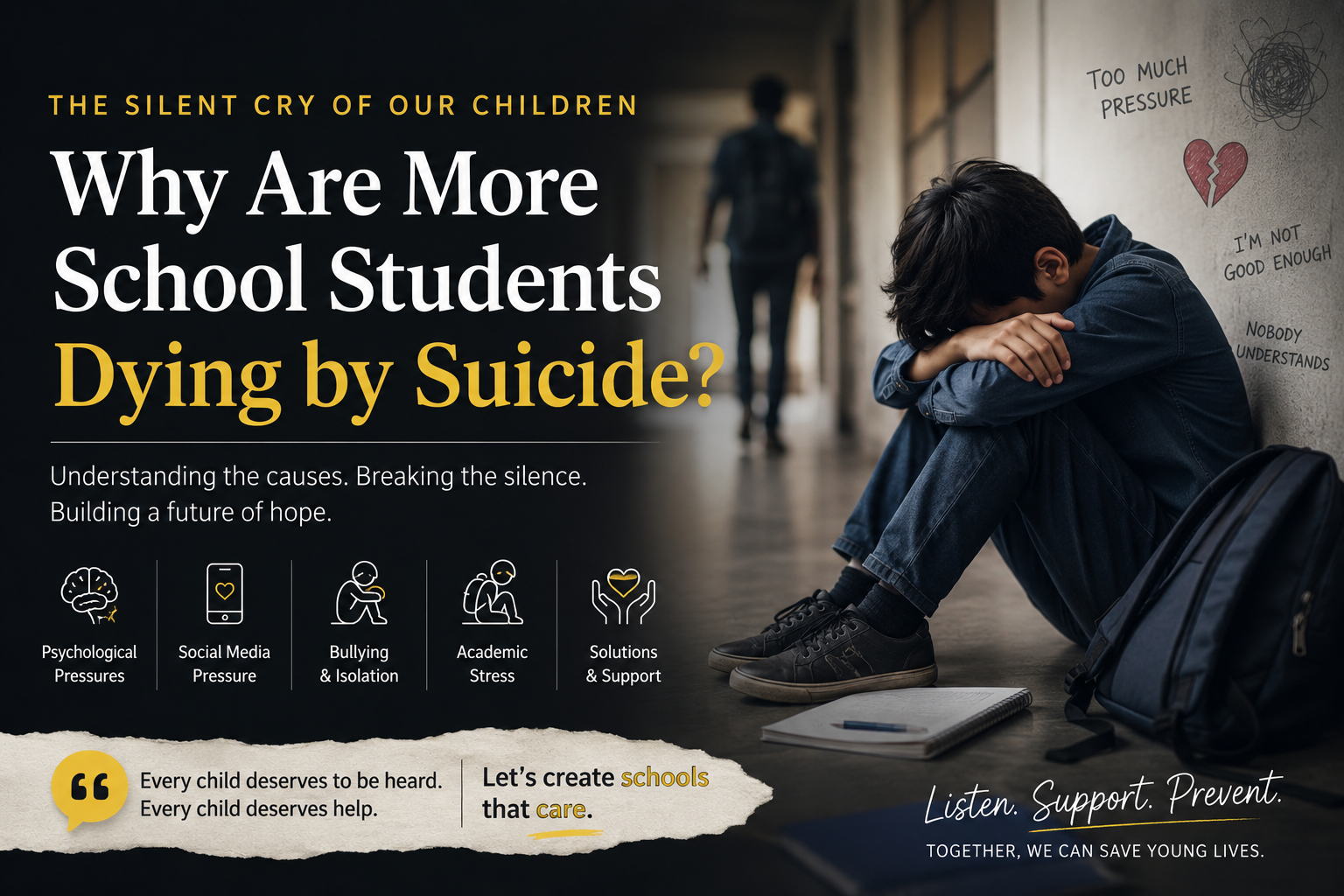
Psychologists have consistently identified multiple factors contributing to suicidal ideation among young people. Academic pressure remains one of the most significant contributors. Children today are expected to excel not only academically but also in sports, music, coding, public speaking, competitive examinations and extracurricular activities. Their schedules resemble those of corporate executives rather than school students. Failure is increasingly portrayed as unacceptable, leaving many children believing that a poor examination result defines their worth.
Parental expectations, though often rooted in love and concern, can unintentionally become another source of overwhelming pressure. Many children fear disappointing their parents more than they fear failure itself. In households where academic achievement becomes the primary measure of success, children may hesitate to express emotional vulnerability, believing that seeking help is a sign of weakness.
The influence of social media has further intensified this crisis. Platforms that were originally designed to connect people have inadvertently become spaces for constant comparison. Children are continuously exposed to carefully curated images of success, wealth, beauty, popularity and academic achievement. Every scroll presents another benchmark against which they measure themselves. The fear of missing out (FOMO), cyberbullying, online trolling and the relentless pursuit of digital validation through likes, followers and comments have created an environment where self-worth is increasingly determined by virtual approval rather than genuine human relationships.
Another deeply worrying trend is the normalisation of bullying. Bullying is no longer confined to school corridors; it follows children home through mobile phones, messaging applications and social media platforms. More concerning is the manner in which several films, web series and television dramas portray bullying as harmless humour, an inevitable part of growing up or even a means of character building. Humiliating classmates, body-shaming, ragging and public ridicule are often presented as entertainment rather than emotional abuse. Young viewers frequently imitate what they watch without fully appreciating the devastating psychological consequences of sustained humiliation.
The psychological impact of bullying is profound. Victims often develop anxiety disorders, depression, social withdrawal, low self-esteem and feelings of worthlessness. Many become reluctant to attend school, while others suffer silently because they fear retaliation or believe that adults will dismiss their concerns as childish disputes. Unfortunately, many schools still lack robust anti-bullying mechanisms or trained professionals capable of identifying early warning signs.
Children today are also growing up in a world that is significantly different from that of previous generations. Nuclear families, demanding work schedules, reduced outdoor play, increased screen time and limited face-to-face social interaction have collectively diminished opportunities for emotional bonding. While children may be digitally connected to hundreds of people, many feel emotionally connected to very few.
The solution to this crisis cannot be found through punitive measures alone. It requires a fundamental shift in how we view children’s emotional well-being.
First and foremost, every school—whether government, private or aided—should have access to qualified psychologists or trained mental health counsellors. Mental health support should not be viewed as a luxury available only in elite institutions but as an essential educational service, just like physical education or first aid. Regular counselling sessions, confidential reporting mechanisms and periodic mental health screenings can help identify children who are struggling long before they reach a breaking point.
Secondly, mental health education must become an integral part of the school curriculum. Children should be taught emotional regulation, resilience, empathy, conflict resolution and healthy coping mechanisms. Equally important is educating parents and teachers to recognise warning signs such as withdrawal, sudden behavioural changes, persistent sadness, declining academic performance, sleep disturbances or expressions of hopelessness.
Schools must also adopt zero-tolerance policies against bullying, both offline and online. Anti-bullying committees should function actively rather than merely existing on paper. Complaints should be addressed promptly, sensitively and confidentially. Children who engage in bullying should receive behavioural intervention and counselling rather than only punishment, recognising that aggressive behaviour often reflects underlying emotional issues as well.
Social media companies, policymakers and content creators also bear a degree of responsibility. Greater awareness regarding cyberbullying, responsible digital consumption and the psychological impact of online interactions is urgently needed. Parents, too, should actively monitor—not invade—their children’s digital lives while fostering open conversations rather than imposing surveillance.
Above all, we need to redefine success. Every child does not need to become an IIT graduate, an IAS officer, a doctor or a lawyer to lead a meaningful life. We must stop measuring children solely through report cards, ranks and trophies. Compassion, kindness, resilience, creativity and emotional intelligence deserve equal recognition.
As I reflect upon the assignment I completed years ago, I realise that while the faces of those vulnerable to suicide may have changed, the underlying lesson remains the same: no achievement, no institution and no family is immune from mental health struggles. The difference today is that the victims are becoming younger, and the warning signs are becoming louder.
Every child deserves to believe that one failed examination, one instance of bullying or one disappointing day does not define an entire lifetime. The greatest responsibility of any educational institution is not merely to produce successful students but to nurture emotionally healthy human beings.
If our schools can teach mathematics, science and history, they can—and they must—also teach children that asking for help is a sign of courage, not weakness. The true measure of an education system is not the number of toppers it produces, but the number of children who leave its gates feeling safe, valued and hopeful about tomorrow.







Leave a Reply